| |
| Wednesday 16 September 2026 |
| Picturing the City |
| Cindy Polemis |
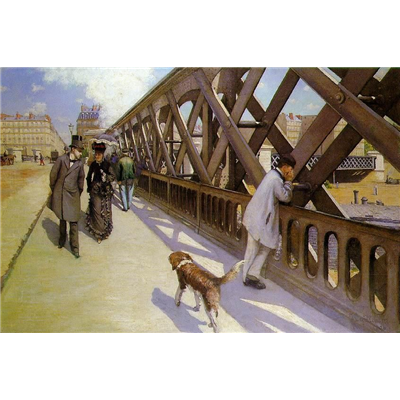 |
From the 19th century the city became a symbol of modern life - a place of social and sexual drama and a force of energy both emotional and physical. Join me on a visual urban journey to explore how artists have engaged with the idea of the city as a rich, sometimes surprising, source of inspiration. The lecture is divided into certain themes and artists include Monet, Pissarro, Caillebotte, Bomburg, Edward Hopper, Hogarth, as well as some contemporary artists. Image: Le Pont de l'Europe. Gustav Caillebote.
Cindy is an art historian, independent lecturer and art guide. She has a BA in Modern History from Oxford University and as a mature student she went back to university to study first for a BA and then for a Masters in History of Art at Birkbeck College, London University. Before that she spent many years as a radio producer and presenter for the BBC World Service working in news and current affairs. Since 2016 Cindy has worked as a lecturer and an official art guide at Tate Britain and Tate Modern. She has also been a trustee at the Museum of the Home, formerly the Geffrye Museum. Cindy has accumulated a wide range of art historical knowledge ranging from 18th European and British art to the contemporary international art scene. She has been an official guide for Frieze Masters art fair in London. She is particularly keen to draw parallels with art and social history and her lectures are accessible and engaging, drawing out the stories of art and artists which are steeped in human emotions and experiences which we all share. |
|
| Wednesday 21 October 2026 |
| Windsor Great Park, past and present |
| Barbara Askew |
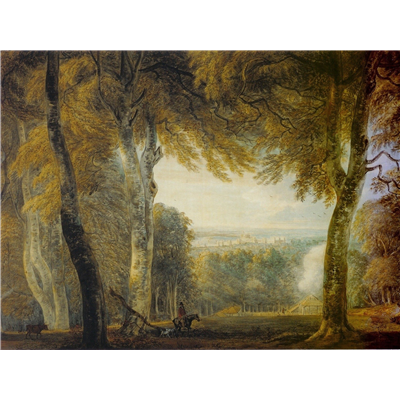 |
CHANGE FROM PUBLICISED LECTURE Windsor Great Park is the largest and oldest space in the densely populated south-east of England and the most important site in north-west Europe of ancient oak trees. This lecture traces the development of the Park and its historic buildings from Saxon times to the present day. Its origins lie in the hunting forest of the Saxon and Norman kings. In the 18th century the Duke of Cumberland began the transformation of a section of the Park into his country estate, creating Virginia Water Lake. King George IV used the Park as his private pleasure ground, complete with a Chinese Fishing Temple and a Royal Menagerie.
Image: Windsor Castle from the Great Park, Paul Sandby, 1780.
Barbara grew up in Eton with Windsor Castle as part of her daily view. She is the acknowledged expert on Royalty, the Royal Collection and Windsor Castle among Blue Badge guides and has acted as the liaison between tourist guides and Windsor Castle for over 30 years. She is the only Blue Badge guide to have been invited to three Royal Weddings at Windsor Castle. Barbara has run 11 training courses on Windsor Castle and the surrounding area and she leads the elite team who guide the tours of Eton College. As well as Windsor Castle she specialises in guiding museums, art galleries and gardens.
Awards, Qualifications & Memberships: BA Hons History, Diploma in Education, Royal Horticultural Society’s Certificate in Horticulture. Member of the Institute of Tourist Guiding. Member of the British Guild of Tourist Guides. |
|
| Wednesday 18 November 2026 |
| Gardens of the Restoration: garden design and garden-themed embroidery 1660-1720 |
| Lucy Hughes-Hallett |
 |
The last splendid flowering of the formal Italianate garden in this country.
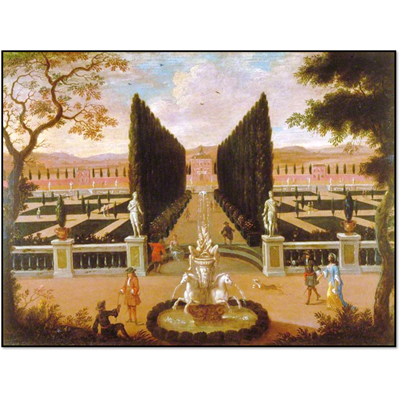
The Royalist landowners returning from exile on Charles II’s Restoration in 1660 brought with them, from Holland or France, new tastes in garden design, and a longing to put down roots. John Evelyn was one of many employed to create little Edens for them. I show paintings and plans of the new gardens created during the late Stuart period. The pictures, many of them by Dutch and Flemish artists who had travelled over with the restored King, are as lovely now as these magnificent gardens once were. Alongside the pictures I show 17th century embroidery. Gardens, as Samuel Pepys noticed, tended to be grandly formal and ‘plain’, with few flowers, but the bed-covers and hangings and cushions produced by the women of the period are wonderfully skilled, and exuberantly colourful. I will show them for their beauty, and decode their messages. All those quaint animals and fabulous blooms carry lessons about politics, about domestic harmony and about humanity's place in the natural world.
Image: Capriccio. Robert Robinson, British artist, d. 1706. An Imaginary Formal Garden and House.
Lucy's most recent book on the 17th century Duke of Buckingham, The Scapegoat, has won the Plutarch Award for Biography of the Year and the Randy Shilts Award for Non-Fiction. Her previous biography, The Pike: Gabriele d’Annunzio was described in The Sunday Times as ‘the biography of the decade’. It won the Samuel Johnson Prize, the Duff Cooper Prize and the Costa Biography Award. Her other non-fiction books include Cleopatra and Heroes. She also writes fiction. Her novel, Peculiar Ground, is largely set in the 17th century, and narrated by a landscape designer loosely based on the diarist John Evelyn. It was described as 'almost Tolstoyan in its sly wit and descriptive brilliance' (The Guardian) and 'full of drama, vivid characters, wit, gorgeous writing and fascinating detail’. (New York Times). A Fellow of the Royal Society of Literature and of the Historical Association, she is a widely respected critic. She was Chair of the Judges for the 2021 International Booker Prize. She lives in London and Suffolk. |
|
| Wednesday 16 December 2026 |
| The Curious History of Christmas Food |
| Peter Ross |
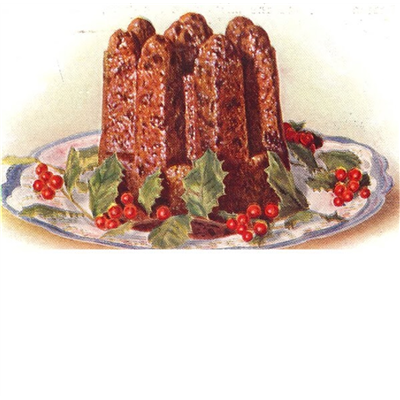 |
The foods we eat at Christmas have a long, curious and visually spectacular history. This lecture narrates and illustrates that history from Medieval boar’s head and brawn, by way of highly decorated seventeenth century mince pies to the almost forgotten Twelfth Night Cake. Medieval illuminated manuscripts, paintings and prints from the seventeenth to the nineteenth centuries, and illustrations from cookery books provide us with images of some of the lost glories of the British Christmas feast.
Image: Christmas pudding. Colour lithograph from Isabella Beeton's Book of Household Management, 1907 edition.
Peter has a BA in the History of Art, an MA in London History, and a PhD in the cultural history of the early eighteenth-century criminal, Jack Sheppard. Until 2023, he was the Principal Librarian at the City of London’s Guildhall Library. He is also a Fellow of the Society of Antiquaries. Peter has appeared on television and radio as a consultant on crime in eighteenth-century London, the history of English food, and Shakespeare’s First Folio. Peter’s The Curious Cookbook, Viper Soup, Badger Ham, Stewed Sparrows, and a Hundred more Historic Recipes was published in 2012 by the British Library and subsequently published in the US, China and Taiwan. Peter is currently engaged in writing a book - Insatiable Appetites: Eating Out in Georgian London to be published by Bodleian Library in May 2026. |
|
| Wednesday 20 January 2027 |
| Notre Dame de Paris: its iconic status in French history |
| Carole Petipher |
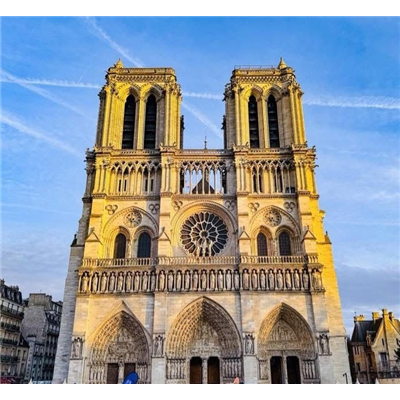 |
In December 2024, Notre Dame Cathedral in Paris, often referred to as the Soul of the City, reopened to the public after a devastating fire had threatened to destroy it 5 years earlier. A seemingly impossible target had been set by the French President to rebuild; yet huge sums of donated money and teams of expert restorers ensured the timescale was met. Such is the symbolic power of this cultural icon in the psyche of the French people and indeed people beyond. In this lecture Carole considers what makes Notre Dame so special. Rather than looking into the fine details of its restoration; she will look instead at its key location, some of its most precious artefacts, and through images consider some of the most significant events to have been staged inside the iconic silhouette.
Along the way, she will introduce a much loved fictional character Quasimodo, Hunchback of Notre Dame, who was responsible for the cathedral’s salvation the first time it faced destruction.
Image: Notre Dame west portal
Carole is an experienced guide and lecturer on combined history and art tours in France with 20 years experience. Having lived and worked on a number of bespoke river vessels and converted barges there she has used them as a platform from which to research her lectures. She uses art in all its guises to explore the characters who shaped France and likes to delve behind the scenes to discover hidden truths. She also acts as a guide for a privately owned ancestral home in her native Chilterns. |
|
| Wednesday 17 February 2027 |
| The 'Incomparable' Empress Josephine: collector, gardener, icon |
| Stephen Duffy |
 |
Napoleon’s Empress, Joséphine de Beauharnais, was a passionate gardener, patron and art collector. Her reputation for generosity, charm and gentleness of manner was of enormous value to Napoleon as a counterweight to the otherwise military and legalistic tenor of his regime. This talk will explain the range of her cultural activities, including her acquisition of a large and distinguished collection of paintings – among them by far the most important group of works by an entirely new school of painting, the troubadours (who painted beautifully crafted historical scenes). We'll also look closely at Malmaison, her chateau near Paris, which she created as a home for her splendid art collection and which was famous throughout Europe for its magnificent gardens containing plants and animals gathered from all over the known world. |
|
| Wednesday 17 March 2027 |
| The Overshadowed |
| Chantal Brotherton-Ratcliffe |
 |
Have you had this experience? You go to a gallery, an exhibition and are stopped dead by an unknown picture: you look at the label and find you have never heard of the artist. How does it come about that there can be such wonderful painters of whom we have never heard? This lecture will consider some of the many reasons for a good artist’s obscurity, from the brevity of his life to the misfortune of his being born and working in the shadow of a larger reputation, such as Leonardo or Rembrandt. But above all it is an excuse to spend an hour gorging on beautiful paintings, finding hidden treasures.
Image: Madonna and Child. Workshop of Andrea del Verrocchio. c.1470
MA in History of Art from Edinburgh, PhD from the Warburg Institute, London University. With 40 years' experience as a lecturer, Chantal has taught at Sotheby's Institute of Art on the MA in Fine and Decorative Arts since 1989, and as a freelance lecturer for a number of societies and institutions in London, including the National Gallery and the Wallace Collection. Having also trained as a paintings conservator, she brings an understanding of the making and the physical painting to her lectures and study sessions. |
|
| Wednesday 19 May 2027 |
| Antony Gormley: a body of work |
| Rosalind Whyte |
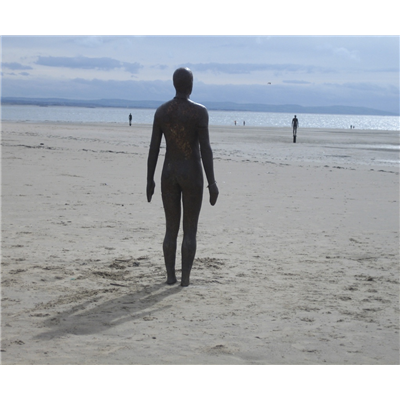 |
Antony Gormley’s career spans nearly 40 years, during which time he has made sculpture that explores the relationship of the human body to space, often using his own body as his starting point. His work has been shown throughout the world, in galleries including the Tate in London and the Hermitage in St Petersburg, but is also often on open display, as public art, such as Another Place at Crosby Beach, near Liverpool. As well as works that he is well known for, like the iconic Angel of the North, this lecture will look at some of his earlier and less well-known works, to give an overall view of the development of his work across his whole career, up to the present time.
Image: Antony Gormley (b.1950). Another Place 2005. Permanent installation at Crosby Beach, Merseyside
Rosalind gained a BA and MA from Goldsmith’s College, and an MA (distinction) from Birkbeck College. She is an experienced guide at Tate Britain, Tate Modern, the Royal Academy and Greenwich. Lectures at Tate, to independent art societies and on cruises.
|
|
| Wednesday 16 June 2027 |
| At the Sign of the Falcon: the life and works of Harry Murphy - goldsmith, silversmith and unique Englishman |
| John Benjamin |
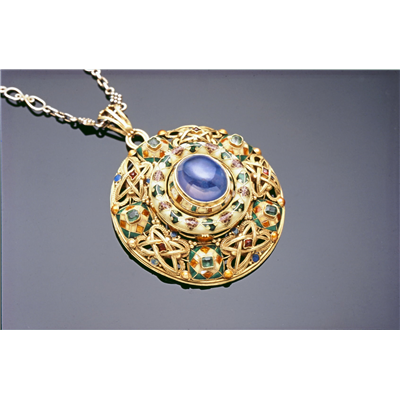 |
H G Murphy’s greatest misfortune was to die just before the start of the Second World War. The designs and inspirations of the pre-war era were simply seen as passé and totally out of keeping with the new spirit of modernism which quickly grew after the Festival of Britain in 1951. Harry Murphy served his apprenticeship under Henry Wilson, probably Britain’s greatest designer goldsmith of the Arts and Crafts era. Here he learnt a wide range of skills and techniques including enamelling, gem-setting and polishing, niello, engraving and hammering. From 1928 until his death in 1939 he worked from retail premises in Marylebone, London, known as the Falcon Studio where he designed and created a prodigious amount of silverware for the corporate, civic and private sectors as well as some truly startling gold, silver and enamel jewellery inspired by nature, architecture, the Ballet Russes and the vibrancy of the Jazz Age.
Image: H.G. Murphy Falcon Studio: water sapphire, enamel and gold pendant.
John is a jewellery historian, lecturer, author and broadcaster. Formerly International Director of Jewellery at Phillips Fine Art Auctioneers, since 1999 he has been an independent jewellery consultant on behalf of the private client network. John is well-known from his appearances over 30 years on BBC Television’s ever-popular Antiques Roadshow. He is a Freeman of the Goldsmiths’ Company, a Court Assistant and Founder Liveryman of The Worshipful Company of Arts Scholars and in 2021 was appointed Honorary Jewellery Adviser to the National Trust. |
|